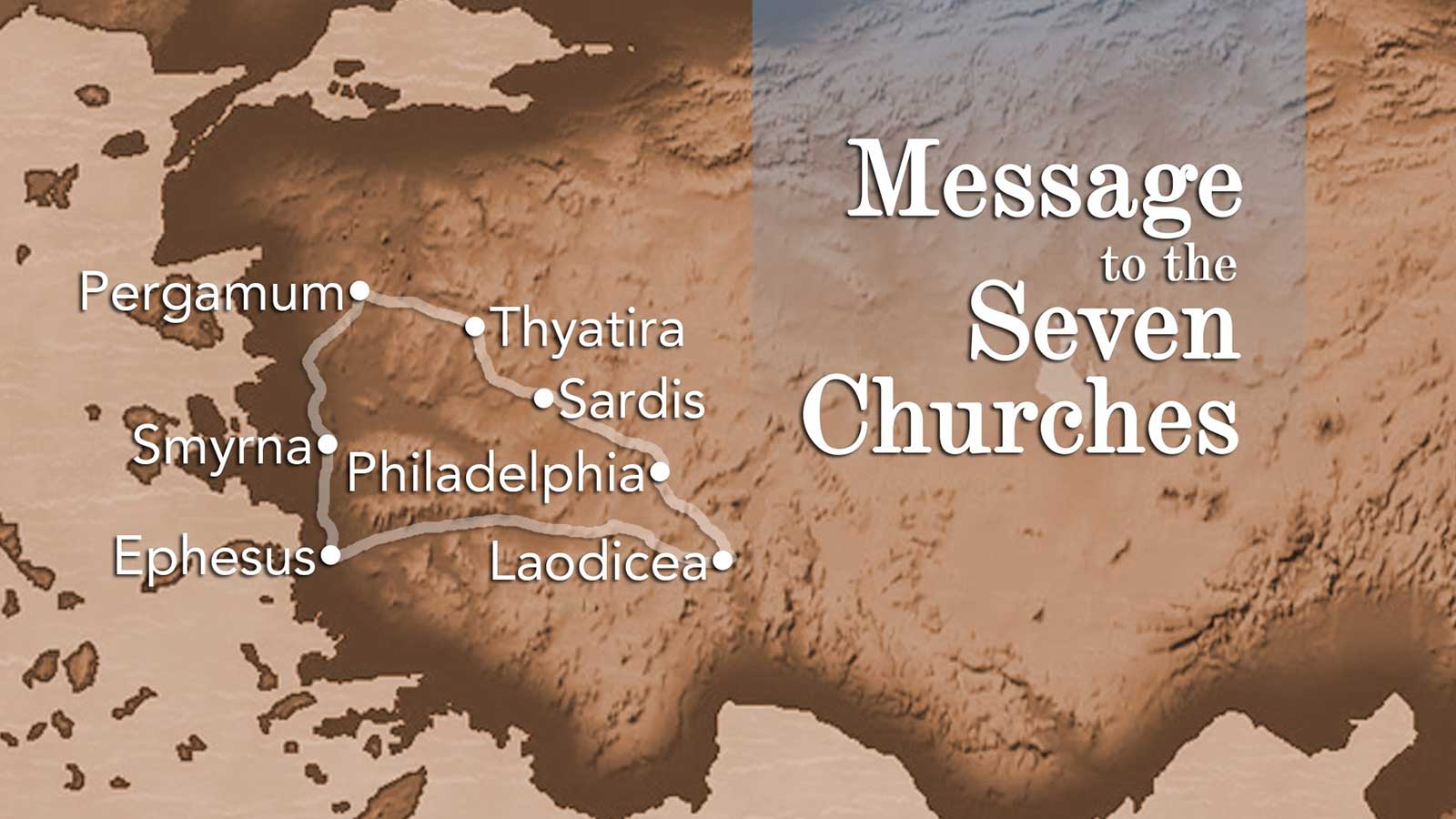
When examining the history of religions, especially the Abrahamic religions, it is impossible to discuss a historical period of religions without references to Anatolia. The chronology of religions in Anatolia, which began with Göbeklitepe 12,000 years ago, may have ended with Islam, but it has also hosted Christianity, the religion with the most followers in the world today. In fact, Christianity, which originated in Jerusalem, grew in Anatolia and strengthened its official status during the reigns of Constantine and Justinian. Therefore, Anatolia played a very significant role in the spread and expansion of Christianity.
In a passage of the Bible, the holy book of Christianity, Saint John recounts a vision in which Jesus asked him to send letters to seven churches, after which he lists these churches and the contents of the letters. All of these early churches, which hold a very important place in the history of Christianity, are located in Turkey, in the Aegean Region. Since the region was then considered the province of Asia in the Roman Empire, these churches are also known as the Seven Churches of Asia and are considered sacred pilgrimage sites by many Christians. A route based on these churches, all important parts of humanity's common cultural heritage and located in ancient city ruins, can create a magnificent cultural journey. Let's get to know the Seven Churches of Asia up close.
The Seven Churches of Asia
Ephesus Church
The church, whose ruins are located in the Ephesus Archaeological Site in İzmir, holds an important place in the history of Christianity. It is believed that the tomb of Saint John, who made significant contributions to the spread of Christianity against pagan beliefs, is located here. Ephesus is also thought to be the place where the Virgin Mary lived after Jesus was crucified. A structure believed to be the house of the Virgin Mary is located in the archaeological site, and this structure is a sacred pilgrimage site for Christians. Ephesus, an important center for the spread of Christianity in the Roman Empire, is an ancient settlement that must be seen, along with its other ruins.
Smyrna (Izmir) Church
In Izmir, one of Turkey's most important cities today, you can see the remains of the city's ancient agora. Smyrna, an important port city in the past, had a large Jewish population that embraced Christianity en masse, playing a major role in the spread of the religion. One of the seven churches to which Saint John wrote letters was sent. You can see the remains of this important ancient city at the Izmir Agora Archaeological Site. You should also definitely visit the Izmir Archaeology Museum, where many of the city's artifacts are displayed.
Pergamon Church
Pergamon, which served as the capital of the Roman Empire's Asian province, also houses one of the seven churches mentioned in the Bible. The letter advises the church to "avoid false teachers," likely emphasizing the strength of pagan beliefs in the city. To learn more about the Pergamon Multilayered Cultural Landscape, you can watch the Uncovering: Pergamon video on the Turkish Museums YouTube channel.
Thyatira Church
The church of the ancient city of Thyatira, located in the Akhisar district of Manisa, is also one of the Seven Churches of Asia mentioned in the Bible. Remains from Thyatira's Hill Cemeteries are also found in Akhisar, which is thought to have developed on the site of the ancient city. The Akhisar Grand Mosque, whose exact construction date is unknown and which was later converted into a mosque, may perhaps be the very church mentioned in the Bible, who knows?
Sardes Church
Located near Salihli district of Manisa, the city is known as the capital of Lydia and the place where state-guaranteed coins were minted for the first time in history. The city, which contains well-preserved Roman structures, has a church that is criticized in the letters of Saint John. The city is criticized for its wealth but lack of faith, and it is advised to strengthen its belief. The Sardes Archaeological Site, which houses the remains of a very important center that has maintained its importance for hundreds of years, deserves to be visited not only for its place in the history of Christianity but also for its other cultural values.
Philadelphia Church
Although a large part of the ancient city, located within the borders of Alaşehir district of Manisa, is buried under modern settlements, the remains of the city's theater and a temple have been unearthed. In the biblical letter, the city's church is praised for its steadfastness and patience in its faith. The Church of Saint John, one of the city's ruins, is also located here, and its three surviving pillars suggest it was a very magnificent structure.
Laodicea Church
Laodicea, a Hellenistic city founded in the 3rd century BC, became one of the important centers of the region for centuries. Known as one of the holy centers of Christianity from the 4th century AD onwards, many unique remains are still being unearthed in the ongoing excavations in the ancient city.
4 Nights Accommodation
Professional Expert Guide
Transportation
Lunches
Dinners
Entrance Tickets