5-Day 4-Night Western Black Sea Tour Departing from Cappadocia
AMASRA / SAFRANBOLU / KASTAMONU / SINOP
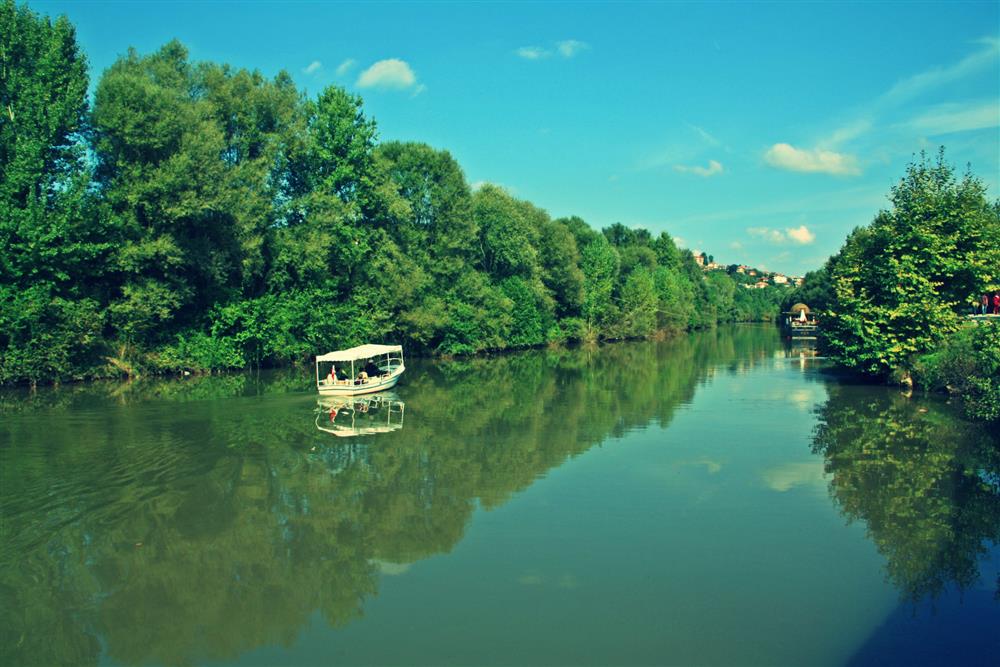
AMASRA: EAGLE STATUE ROAD MONUMENT, PANORAMIC HILL, AMASRA MUSEUM, BOZTEPE, DENGIN CASTLE, KEMERR BRIDGE / BOAT TOUR
SAFRANBOLU: HIDIRLIK HILL, OLD TOWN, GLASS TERRACE, NOMADIC VILLAGE, GOVERNORS' HOUSE
KASTAMONU: CASTLE VIEW / KASTAMONU MUSEUM / NASURULLAH KADI MOSQUE / ŞERİFE BACI MONUMENT / HAT MUSEUM
SINOP: SINOP CASTLE / SINOP PRISON / HAMSİLOS BAY / ERFELEK WATERFALLS
DAY 1: 10:00 / 10:30 - Arrival at the Amasra Kuşkayası Road Monument and a 30-minute tour, followed by free time. 11:00 / 12:00 - Visit to Amasra Museum
12:00 / 13:00 - Amasra Center
13:00 / 14:00 - Lunch at Amasra Fish Restaurant (Meal extra)
14:00 / 17:00 - Amasra Castle, Kemere Bridge, Çekiciler Bazaar, Amasra Indoor Market
DAY 2: Safranbolu Hıdırlık Observation Hill: Hıdırlık Observation Hill, a viewing terrace overlooking the city, is one of the best spots to understand and photograph Safranbolu's unique architecture and texture. From here, you can view the entire old bazaar layout and all the historical buildings, and photograph unforgettable moments.
Old Bazaar: Governor's House, Cinci Han, İzzet Mehmet Pasha Mosque, Blacksmiths Street, Canyon View, Tannery, Arasta Market, Köprülü Mehmet Pasha Mosque, Cinci Hamam, Turkish Delight Museum.
Crystal Terrace: Located at a point connecting Incekaya Canyon and Tokatlı, 140 meters above the canyon floor, it was established in 2004 and is Turkey's first and the world's second glass terrace.
Incekaya Aqueduct: Located within Tokatlı Canyon. It was built by İzzet Mehmet Pasha, who served as Grand Vizier during the reign of Sultan Selim III, to bring water to Safranbolu. The aqueduct, which embodies the traditional Ottoman architectural style, was completed in 1798 and solved Safranbolu's water problem. The 116-meter-long aqueduct is approximately 60 meters above the ground. The 5-arched section on top is entirely made of stone and Khorasan mortar. The aqueduct was designed with three curves to balance the flow rate of the water passing through it. Water from the aqueduct, flowing through a channel, was first distributed to a water balance, and then to fountains in the city. This distributed water was popularly known as "pasha water."
During the 45 minutes of free time we will give here, those who wish can hike in the Tokatlı Canyon, enjoy a zipline adventure, or have tea & coffee at the Crystal Terrace. Afterwards, we will return to our hotel.
**HISTORY OF KASTAMONU**
The known history of Kastamonu begins with the Hittite Empire. After the Hittites, these lands, ruled by the Phrygian and Lydian Kingdoms, fell into the hands of the Persians in the 4th century BC. In the 4th century BC, Alexander the Great incorporated the lands of Kastamonu, along with Anatolia, into Macedonia. After Alexander, the Kingdom of Pontus, which seized the region, was destroyed by the Romans in the 1st century BC. Kastamonu, which remained within the borders of the Roman Empire for many years, joined the Byzantine Empire in 395 AD, like all of Anatolia, following the division of the Roman Empire.
Kastamonu first came under Turkish control in 1105, during the reign of Gümüş Tekin, son of Ahmet Gazi, in the Danishmend period. After nearly a century under Danishmend rule, the city and its surroundings passed back to the Byzantines for 15 years, and in 1213, it was captured by the Seljuk commander Hüsamettin Çobanbey on the orders of the Anatolian Seljuk Sultan Alaaddin Keykubat. The city and its surroundings, which remained under Danishmend rule for nearly a century, passed back to the Byzantines for 15 years, and in 1213, it was captured by the Seljuk commander Hüsamettin Çobanbey on the orders of the Anatolian Seljuk Sultan Alaaddin Keykubat.
DAY 3: KASTAMONU ARCHAEOLOGY MUSEUM
The museum building, located in the city center of Kastamonu, was designed by architect Kemaleddin Bey and built in 1917 as the Committee of Union and Progress Club. Serving as the Independence Court in 1921, the building also functioned as the Turkish Hearth, People's Party, and Kastamonu Youth Organization buildings until 1945.
On August 30, 1925, Mustafa Kemal Atatürk delivered his second speech regarding the hat and clothing reforms here, after his speech in İnebolu. Between 1945 and 1952, it served as a warehouse for archaeological artifacts, but in 1952 it was transformed into a regional museum. The museum, which sheds light on the region's early history with many artifacts collected from Kastamonu and its surroundings, contains a rich collection of artifacts from various periods. Furthermore, a section of the exhibition is arranged as the Atatürk Hall, displaying various items and photographs used by Atatürk during his visit to Kastamonu in 1925.
**ŞERİFE BACI MONUMENT**
During the War of Independence, many volunteer men and women transported ammunition and supplies along the İnebolu-Ankara logistics line, thus contributing to the nation's progress.
DAY 4
Kastamonu Canyons
Horma Canyon Hike
Valla Canyon Burgu Terrace
DAY 5: SINOP CASTLE / SINOP PRISON / HAMSILOS BAY / ERFELEK WATERFALLS
07:00: We depart from our hotel in Kastamonu at 7:00 AM and after a 2.5-hour journey, we reach Sinop Erfelek Waterfalls. After 1 hour of free time here, we continue towards Sinop. (1 hour)
14:00: We arrive at Sinop Hamsilos Bay and after our visit here, we meet at the vehicles with 30 minutes of free time.
15:00: We depart for Sinop city center. (20 minutes)
15:30 / 18:00: Visit to Sinop Prison / Sinop Castle / Free time in the bazaar.
SINOP
The city of Sinop, occupying the northernmost tip of the Western Black Sea Region, has a history stretching back to the Hittites. Although archaeological excavations in the region have not unearthed any Hittite artifacts or documents, it is assumed that this is the city mentioned as "Sinuva" in some Hittite sources, a city that has yet to be found. It is also thought to have taken its name from Sinope, the daughter of Asapos, a water nymph mentioned in Greek mythology. On coins from the Hellenistic period that have survived to the present day, the city's name appears as "Sino," suggesting a derivation from the word "Sinope."
Despite the ambiguities surrounding the origins of the city's name, Sinop is undoubtedly one of the most unique cities in the Western Black Sea. From ancient times to the present day, it has maintained its status as a trading and port city without interruption. This city, where modern and historical architecture intertwine, also stands out with its natural beauty and its stunning bays and beaches. With the valuable historical, architectural, philosophical, and archaeological information your guide will provide, you will deeply experience and get to know this city, and you will add Sinop to your travel plans for your next vacation, with the condition that you stay longer.
The city, which still holds the distinction of being the only province without traffic lights in its city center and within its borders, is also notable for its extremely happy, cheerful people and their hospitality towards visitors from outside.
* 4 Nights Bed & Breakfast Accommodation
* Transportation
* Professional Guiding
* Dinner
* Travel Insurance
* Single Room
* Lunch